
How Much Does a Custom WordPress Website Cost in 2026?
One of the most common questions business owners ask before starting a website project is:
How much should a custom WordPress website cost?
The short answer is that most custom WordPress websites cost anywhere from $1,500 to $15,000+, depending on design requirements, functionality, integrations, content needs, and business goals.
However, focusing only on price can lead to expensive mistakes.
The better question is:
How much should your business invest in a website that supports growth, generates leads, and delivers long-term value?
A website is no longer just an online brochure. For many businesses, it is the primary source of leads, customer inquiries, bookings, and sales.
Understanding where your money goes can help you make a smarter decision.
Quick Cost Breakdown
| Website Type | Typical Cost Range |
|---|---|
| Starter Business Website | $1,500 – $3,500 |
| Professional Service Website | $3,500 – $8,000 |
| Custom Lead Generation Website | $5,000 – $12,000 |
| WooCommerce Store | $6,000 – $20,000+ |
| Enterprise Website | $20,000+ |
The final cost depends less on WordPress itself and more on what your business needs the website to accomplish.
What Makes a Website Custom?
A custom WordPress website is built around your business instead of forcing your business into a pre-built template.
This means:
- Custom layouts
- Tailored user experiences
- Conversion-focused design
- Custom functionality
- Better scalability
- Greater SEO control
If you’re evaluating whether a tailored solution is right for your company, our Custom WordPress Development Guide explains how custom development differs from standard website builds and why many growing businesses eventually move away from templates.
What Factors Affect Custom WordPress Website Cost?
Design and User Experience
A basic design costs less than a website built around user behavior and conversion optimization.
Businesses investing in professional UI and UX design typically focus on:
- User journeys
- Lead generation
- Conversion optimization
- Mobile usability
- Brand positioning
A website designed to convert visitors into customers often produces a better return on investment than a website built solely to look attractive.
Functionality Requirements
Custom functionality is one of the biggest cost drivers.
Examples include:
- Appointment booking systems
- Membership platforms
- Customer portals
- Learning management systems
- Quote calculators
- CRM integrations
- API integrations
The more functionality required, the more development time is needed.
Ecommerce Features
If you’re selling products online, costs increase due to additional requirements such as:
- WooCommerce setup
- Product management
- Payment gateways
- Shipping integrations
- Customer accounts
- Subscription systems
Businesses deciding between ecommerce platforms should also review our WordPress vs Shopify for Ecommerce comparison before investing.
Content Creation
Content is often overlooked during budgeting.
Many websites require:
- Service page content
- Landing pages
- Product descriptions
- SEO-focused blog content
- Conversion-focused copywriting
Without strong content, even the best-designed website will struggle to perform.
Technical SEO
Technical SEO directly affects visibility in Google Search.
Custom websites often include:
- Schema markup
- Optimized site structure
- Internal linking
- Core Web Vitals improvements
- Mobile optimization
- Crawlability improvements
Building these elements correctly from the start is usually more cost-effective than fixing them later.
Template Website vs Custom Website Cost
Many businesses compare custom development against templates before making a decision.
| Factor | Template Website | Custom Website |
|---|---|---|
| Upfront Cost | Lower | Higher |
| Setup Speed | Faster | Slower |
| SEO Flexibility | Moderate | High |
| Branding | Limited | Unique |
| Performance | Theme Dependent | Optimized |
| Scalability | Limited | High |
| Long-Term Value | Moderate | Strong |
A template website may save money initially.
However, businesses often reach a point where limitations begin affecting growth.
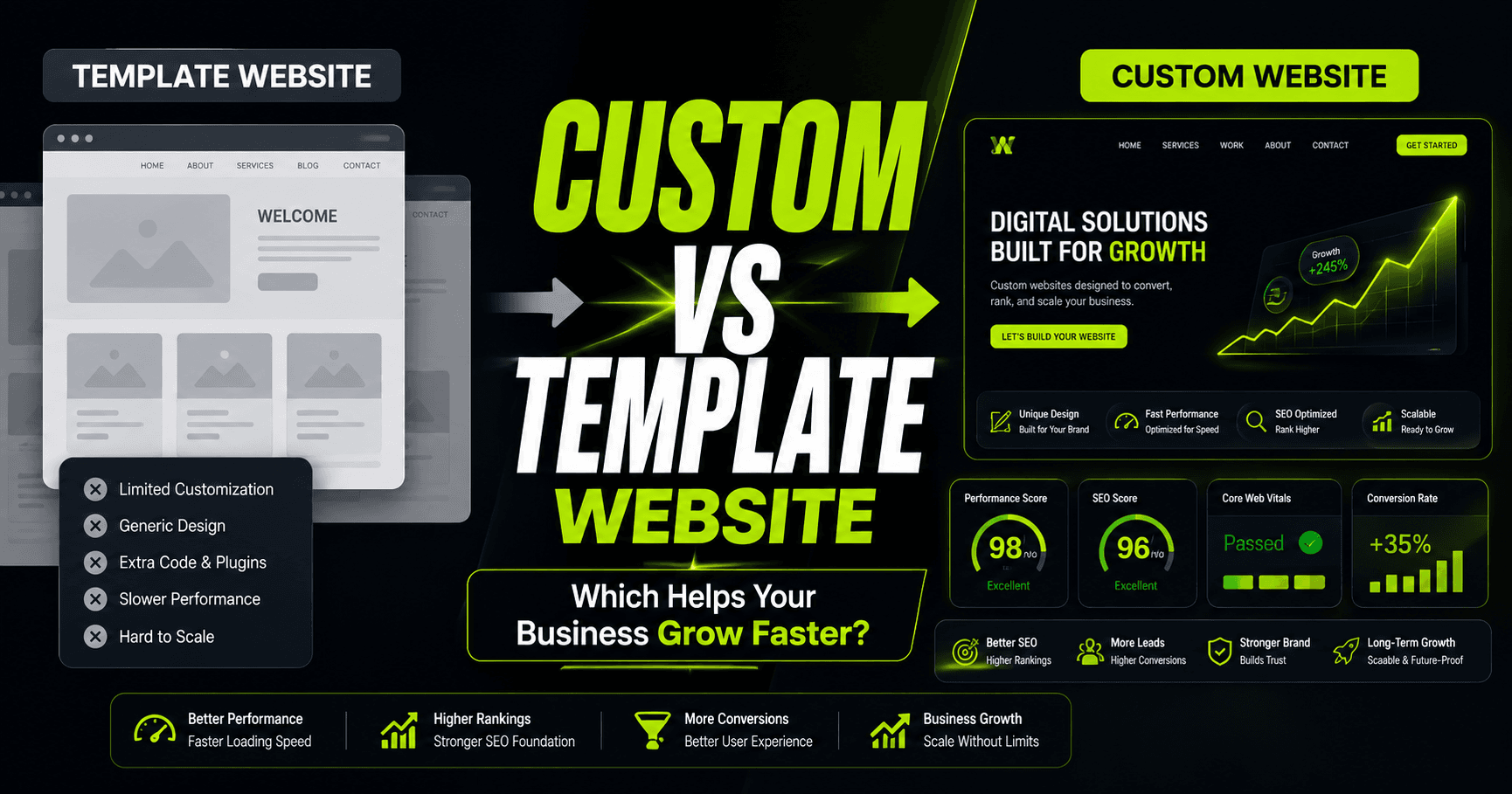
This is one reason we recently explored whether a Custom Website or Template Website is the better choice for long-term business growth.
How Much Should a Small Business Spend on a Website?
There is no universal number.
A local service business generating leads through referrals may require a different investment than a company relying heavily on SEO and digital marketing.
A practical guideline:
| Business Stage | Recommended Investment |
|---|---|
| Startup | $1,500 – $3,500 |
| Growing Business | $3,500 – $8,000 |
| Established Company | $5,000 – $15,000+ |
The right budget depends on the role your website plays in acquiring customers.
Is a Custom WordPress Website Worth the Investment?
For businesses relying on online visibility, the answer is often yes.
A custom website can improve:
- Search visibility
- Lead generation
- User experience
- Conversion rates
- Brand credibility
- Website performance
The investment becomes easier to justify when the website consistently generates business opportunities.
A website that produces qualified leads every month often pays for itself far faster than expected.
The Hidden Cost of Choosing the Wrong Website
Many businesses focus on saving money upfront.
What they don’t calculate is the cost of limitations later.
Common issues include:
- Slow website performance
- Poor user experience
- Low conversion rates
- SEO limitations
- Expensive workarounds
- Frequent redesigns
The cheapest solution is not always the most affordable solution long term.
The Cost of a Website Redesign Later
Many businesses start with a low-cost template website and eventually rebuild everything.
The process often includes:
- New design
- New content
- New development
- SEO corrections
- Performance optimization
This results in paying for the website twice.
If your current website already struggles with performance, our guide on how to speed up a WordPress website explains why website speed directly affects user experience, SEO performance, and lead generation.
Core Web Vitals, Performance, and Website Cost
Google continues to prioritize user experience metrics.
Core Web Vitals measure:
- Loading speed
- Visual stability
- Interactivity
A poorly optimized website can negatively affect:
- Rankings
- Conversions
- Bounce rates
Custom websites typically provide greater control over these performance factors.
This becomes increasingly important as businesses compete for visibility in search engines and AI-powered search results.
Elementor, WordPress, and Custom Development
Many business owners assume custom development means everything must be coded from scratch.
That’s no longer true.
Modern WordPress websites can combine:
- Custom development
- Elementor
- WooCommerce
- Custom functionality
- Performance optimization
The goal is not to use more technology.
The goal is to use the right technology for the business.
How to Choose the Right Website Investment
Ask yourself:
- Will this website generate leads or revenue?
- Is SEO important to my growth strategy?
- Do I need custom functionality?
- Will the website need to scale?
- Does my current website limit growth?
The answers usually determine whether a template or custom solution makes more sense.
Final Thoughts
Custom WordPress website pricing varies because business requirements vary.
The question should not be:
What’s the cheapest website I can build?
The better question is:
What type of website will help my business grow over the next three to five years?
For some businesses, a template is enough.
For others, a custom website becomes a long-term asset that supports SEO, lead generation, conversions, and growth.
Understanding the difference can help you make a smarter investment today and avoid expensive decisions later.
Frequently Asked Questions
How much does a custom WordPress website cost in 2026?
Most custom WordPress websites cost between $1,500 and $15,000+, depending on design complexity, functionality, integrations, and business goals.
Why are custom websites more expensive than templates?
Custom websites require strategy, design, development, testing, optimization, and functionality tailored specifically to a business.
Can a custom WordPress website improve SEO?
Yes. Custom websites provide greater control over site structure, technical SEO, Core Web Vitals, internal linking, and user experience.
Is WordPress still worth using in 2026?
Yes. WordPress remains one of the most flexible content management systems available and powers millions of business websites worldwide.
What affects website cost the most?
Custom functionality, ecommerce requirements, design complexity, integrations, content creation, and SEO requirements are usually the biggest cost factors.
Ready to Build a Website That Supports Growth?
Whether you’re planning a new website, considering a redesign, or investing in custom development, focus on long-term value rather than upfront cost alone. The right website should support visibility, lead generation, conversions, and business growth for years to come.